


Series “Brazil Through the Eyes of Public Leaders”: Justice Cármen Lúcia on Democracy, Distrust and the Supreme Court
In her remarks, Cármen Lúcia emphasized the role of institutions in safeguarding fundamental rights and preserving the democratic rule of law, highlighting the importance of an independent, impartial, trustworthy judiciary committed to its civic function.
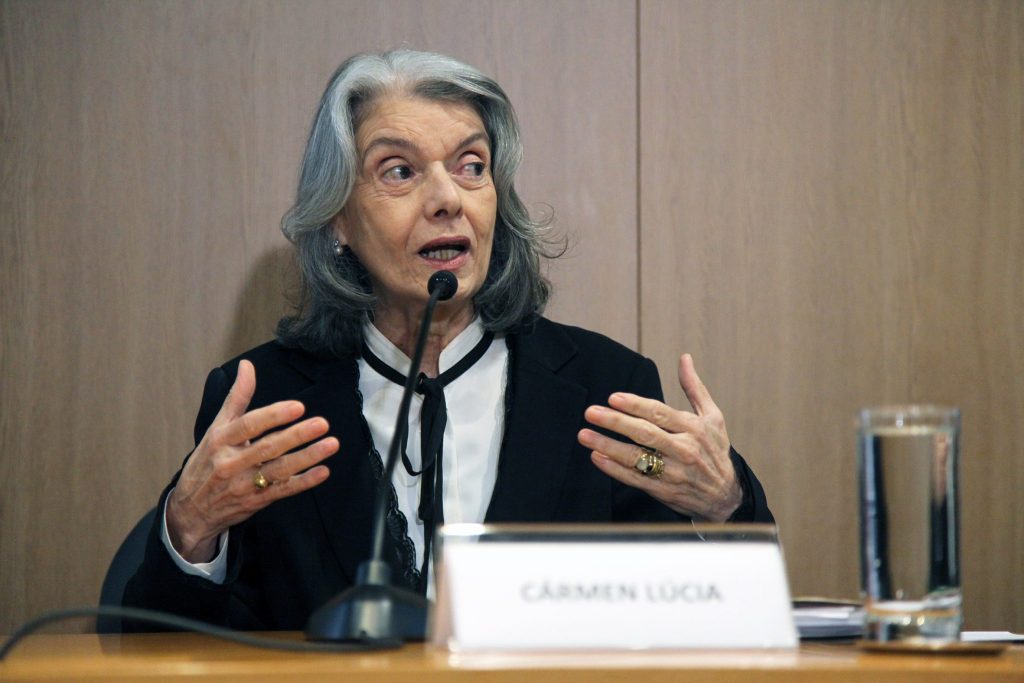
“There can be no democracy without an independent judiciary that commands public trust,” Supreme Court Justice Cármen Lúcia said during a lecture at the FHC Foundation on April 13. “That does not mean a judiciary admired by everyone. It means citizens must believe that judges rule according to the law and their own honest understanding of it.”
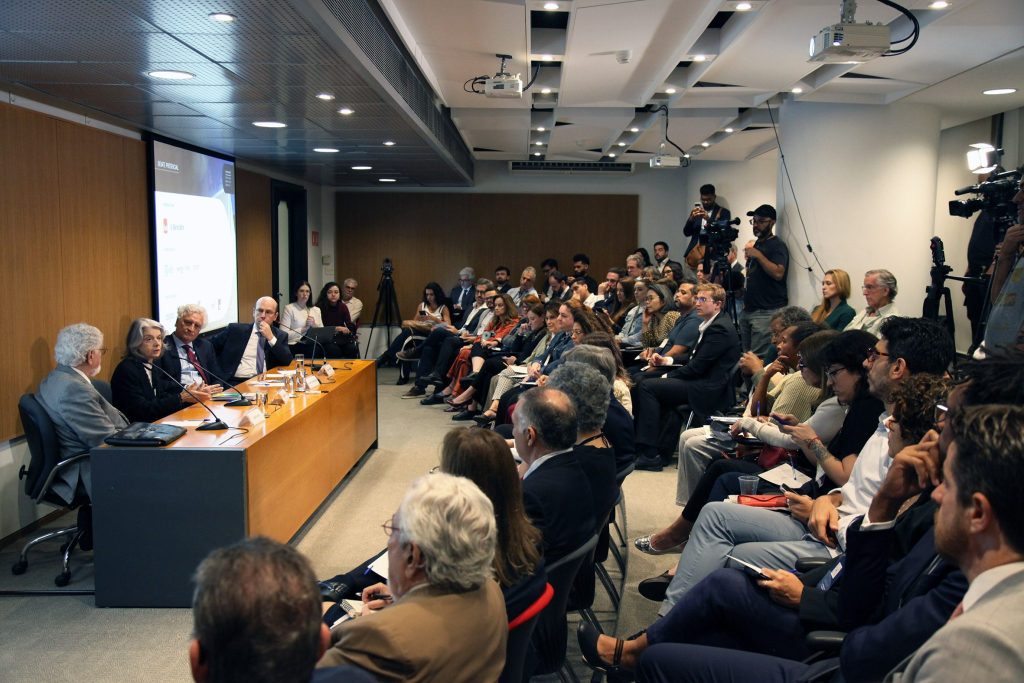
Speaking before an audience in São Paulo, the justice argued that democratic stability ultimately depends on institutions regarded as impartial, even amid profound political and social change.
At the outset of her remarks, Cármen Lúcia defended greater openness between the courts and society, saying judges should not isolate themselves in Brasília.
“Today, on a Monday morning, I’m here at the Fernando Henrique Cardoso Foundation speaking with you,” she said. “A judge’s routine is intense, but from time to time we need to step outside the court, accept public invitations and, above all, listen. A judge who sees the world only from an office in Brasília — perhaps the worst place from which to observe reality — risks losing touch with the country as it actually is.”
She said transparency was essential to preserving institutional credibility. “My schedule is public and available to anyone,” she noted. “The more transparent we are, the healthier both the judiciary and democratic life become.”
The discussion also featured Celso Lafer, president of the FHC Foundation; Oscar Vilhena Vieira, a constitutional law professor at the Getulio Vargas Foundation; and political scientist Sergio Fausto, the foundation’s executive director.
A Crisis of Trust
Opening the debate, Oscar Vilhena Vieira referred to a document prepared by jurists affiliated with the foundation and delivered to Supreme Court President Edson Fachin in late 2025. The report proposed reforms aimed at restoring confidence in the court at a moment when Brazil’s institutions face growing skepticism.
“How do you see the process of rebuilding the Supreme Court’s authority?” Vieira asked.
Cármen Lúcia responded cautiously, acknowledging both the gravity of the crisis and the difficulty of evaluating it from inside the institution itself.
“As I learned growing up, a fish does not see the water,” she said. “When you are immersed in the turmoil — not only the criticism but the sheer volume of work — it becomes extremely difficult to step back and assess the situation clearly.”
She recalled her own tenure as chief justice between 2016 and 2018, a period she described as one of the hardest of her professional life. In January 2017, Justice Teori Zavascki, who oversaw major corruption investigations, died in a plane crash near Paraty. Weeks later, she lost her father.
“I returned to Brasília immediately after his funeral to continue holding hearings,” she said. “I’m not complaining. But I know what it means to sit on that court and try, every day, to do the right thing honestly and according to the law.”
According to the justice, the erosion of trust extends far beyond the courts.
“Democracy depends on confidence — confidence in institutions, in public life and in one another,” she said. “When I was growing up in Espinosa, in the interior of Minas Gerais, there were three central figures in town: the mayor, the priest and the judge.”
Today, she argued, Brazilian society has become far more distrustful, including in personal relationships.
“My parents taught me that if something happened, I should seek out an adult,” she said. “Today, children are often taught not to trust anyone outside their immediate family.”
She linked part of that transformation to social media and digital technology, which she said have weakened social bonds and intensified public hostility. “There is no ready-made answer to this crisis of trust,” she added. “It has to be rebuilt.”
Learn more:
‘Brazil Through the Eyes of Public Leaders,’ with Justice Edson Fachin(event held on August 4, 2025)
“The Supreme Court Didn’t Change Me”
Cármen Lúcia said the Supreme Court could not remain unchanged, though reforming institutions rooted in long-standing legal culture would be slow and difficult.
“The world has changed, Brazil has changed, and constitutional interpretation has become vastly more complex,” she said.
She noted that the court, despite its institutional prestige, remains composed of “eleven human beings, with limitations, flaws and difficulties.”
To improve constitutional jurisprudence, she argued, judges must engage more directly with society itself. “Trust depends on knowledge,” she said. “People trust what they understand.”
She also delivered one of the event’s most memorable lines:
“I did not change the Supreme Court, but the Supreme Court did not change me either.”
“I remain the same person my parents raised,” she added.
An Overwhelmed Court
Much of the discussion focused on the enormous caseload faced by Brazil’s judiciary after the 1988 Constitution expanded constitutional rights and broadened access to the courts.
“The Constitution constitutionalized nearly everything,” Cármen Lúcia said. “From environmental law to public administration to social rights — everything eventually reaches the Supreme Court.”
Brazil currently has roughly 18,000 judges and about 80 million pending cases, she noted. The Supreme Court alone has more than 20,000 active proceedings.
“People say Brazilians no longer trust the judiciary,” she said. “Imagine what the numbers would look like if they truly didn’t.”
As of April 13, she said, she personally was overseeing 1,056 cases.
“The court is being buried under an overwhelming caseload,” she said. “What is demanded of us every day is almost a small miracle.”
New Questions for Old Institutions
The justice also spoke at length about the challenges posed by technological and social change.
“Every morning we wake up to questions humanity has never faced before,” she said.
Social media, she argued, has transformed public discourse and created new forms of collective punishment, particularly among young people. Artificial intelligence poses additional uncertainties whose consequences remain unclear.
She also warned that debates over free expression online had increasingly been captured by organized political interests.
“We are confronting unprecedented issues,” she said. “Climate change, artificial intelligence, indigenous rights, the digital public sphere — our old legal toolkit is no longer enough.”
Reform and Political Culture
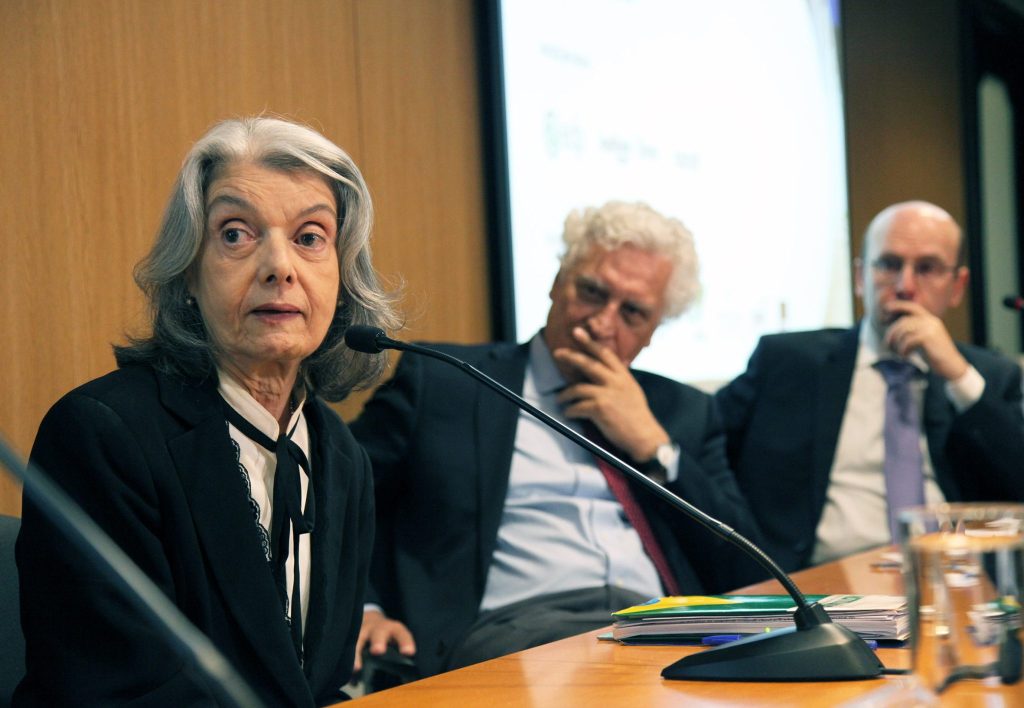
Asked by Sergio Fausto whether Brazil should reduce the number of constitutional matters that can reach the Supreme Court, Cármen Lúcia acknowledged that some form of “deconstitutionalization” might help alleviate pressure on the court. But she said such reforms would face enormous political resistance.
“Everyone wants their own clause written into the Constitution,” she observed.
A more viable alternative, she suggested, would be limiting the number of appeals that ultimately reach the Supreme Court. But even that would require a broader cultural shift.
“As a lawyer, I constantly heard clients say, ‘I was told the Supreme Court can still review this,’” she recalled.
She said she once supported proposals championed by former Chief Justice Antonio Cezar Peluso to allow lower courts to definitively resolve certain disputes.
“In theory, people support the idea,” she said. “But when it becomes their own case, no one wants to give up the possibility of a final appeal.”
Ultimately, she argued, institutional reform depends not only on legal changes but on democratic culture itself.
“Without civic education — without a democratic culture that understands rights and the limits of institutions — these reforms will never truly take root,” she said.
A member of Brazil’s Supreme Court since 2006, Cármen Lúcia was the second woman ever appointed to the bench. She served as chief justice between 2016 and 2018 and currently presides over Brazil’s Superior Electoral Court.
Closing the event, Celso Lafer said the discussion highlighted the importance of constitutional practice in sustaining democratic institutions.
“We often analyze these questions from the outside,” he said. “Today we had the rare opportunity to hear from someone living them from within.”
Otávio Dias is a content editor at the FHC Foundation. A journalist specializing in politics and international affairs, he was a correspondent for Folha in London and editor of the website estadao.com.br.