Series “Brazil through the eyes of public leaders”, with Gabriel Galípolo, President of the Banco Central do Brasil
Under discussion in this debate: the challenges facing the Brazilian economy in the new international scenario.
“The Central Bank of Brazil has a role to fulfill. This also applies to other institutions of the Republic, but I am sitting in the chair of the Central Bank president. The more the Central Bank’s decisions depend on the legal and institutional framework of the country’s monetary policy and less on who is sitting there, the better it will be for the country. The role of this historic period of normalization of institutions and institutional relations is precisely that. I have a very clear goal, which was determined by a legal mandate. It is not a suggestion that was given to me, but a legal determination, and I have great appreciation for the democratic rule of law,” said economist Gabriel Galípolo, president of the Central Bank, in a lecture at the Fundação Fernando Henrique Cardoso.
Galípolo — who took office as president of the Central Bank of Brazil in January 2025 for a four-year term — quoted Swiss economist Claudio Borio, an expert on topics such as financial stability, the relationship between credit and economic cycles, and the role of central banks: “Countries may have different inflation targets, but I really like Claudio Borio’s definition of the role of the Central Bank: to ensure that inflation is not an issue in people’s lives. Ideally, inflation should be so low that it does not affect the economic decisions of companies and individuals. The Central Bank will do its job and pursue the goal it has been given. Whether it receives criticism or praise in return, this should be less and less related to the personality of those in charge.”
In his lecture, which began with an analysis of the international economic scenario, focusing on the United States under the Trump administration and its impacts around the world, he continued with a detailed explanation, based on graphs, of the domestic macroeconomic scenario and the Central Bank’s recent actions. Galípolo spoke about the Brazilian labor market – “the most exuberant in the last three decades” – and the prospects for inflation and economic growth.
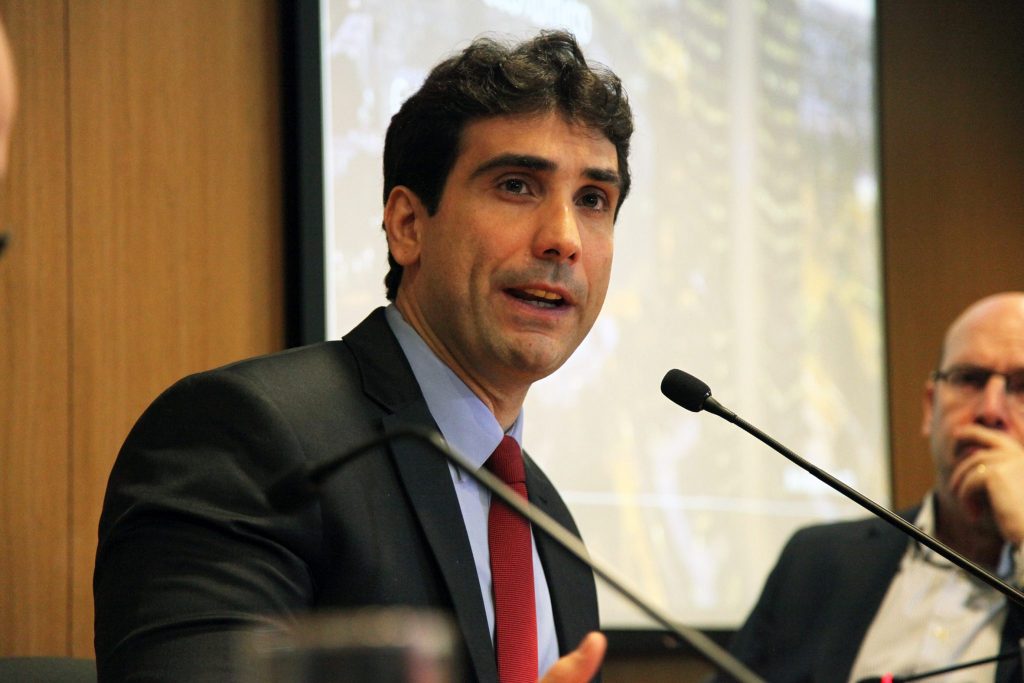
“The data we have shows that we are moving toward a slowdown in economic growth and a gradual convergence toward the inflation target set by the National Monetary Council (3% per year, with a tolerance margin of 1.5 percentage points above or below). The macroeconomic scenario is better than that outlined by the Central Bank in December 2024, but we have not yet reached the target and we must grit our teeth and endure more restrictive interest rates for a slightly longer period,” he said.
Galípolo defended the importance of having “due humility in the face of this object called the economy”: “It is essential to observe the data, considering that there are lags, and to implement the appropriate measures consistently. What cannot be done is to take all the pills at once, nor to interrupt the treatment.”
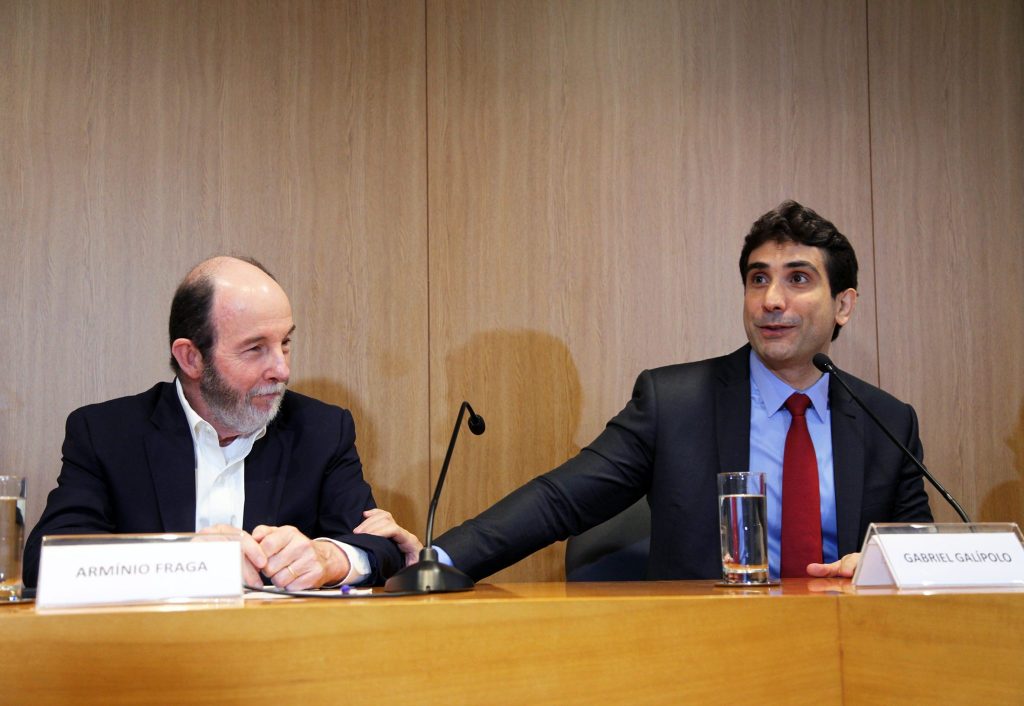
Galípolo comments on Fernando Henrique Cardoso’s influence on his education
The speaker recalled that, as an economics student in the early 2000s, he studied two works by sociologist Fernando Henrique Cardoso that had a major impact when they were released in the second half of the 1960s and in the following decades: “Industrial Entrepreneurs and Economic Development in Brazil” (1964) and “Dependence and Development in Latin America” (1969), co-authored with Chilean sociologist Enzo Faletto.
“When I was studying economics at PUC-SP, we debated whether there was a contradiction between what FHC had written in the 1960s and what was happening in the world in the early 2000s, with the advance of globalization. How to treat the national dimension within a more traditional conception in the context of an economic system increasingly characterized by the expansion of globalization? I believe that today we are again dealing with these contradictions about what is national and what is international, but with even greater complexity. At the same time that we have an economic system that has been very successful in globalizing, we have legal and social organization regimes that operate within national spaces. These conflicts are quite clear today, both from the point of view of discussions about jurisdiction and economic policy issues,” he said.
Galípolo’s lecture is part of the series “Brazil in the view of public leaders,” held by the Fundação FHC since 2024. Former Central Bank president Armínio Fraga, a member of the Fundação’s Board, made comments and asked questions, as did political scientist Sergio Fausto, general director of the Fundação FHC.
Otávio Dias is content editor at the Fundação FHC. A journalist specializing in politics and international affairs, he was a correspondent for Folha in London and editor of the website estadao.com.br.