


Affirmative action in Brazil: what has been achieved, what challenges remain?
Divided into two panels, the debate brought together experts and leaders with recognized experience in the field, who revisited the history of affirmative action in the country and projected the challenges that still lie ahead.
Brazil has made significant progress over the past 40 years in developing legislation to combat racism and promote racial equality, with the adoption of quotas in higher education and public service. However, racial inequalities remain enormous. To continue advancing, it is necessary to improve the management of affirmative action policies, which are hampered by a lack of better monitoring of their results and greater coordination between ministries, government agencies, universities, and the private sector.
In addition, new instruments must be created because the quota policy does not exhaust the range of affirmative actions, including the National Fund for Economic Reparation and Promotion of Racial Equality and a National System for the Promotion of Racial Equality, inspired by the SUS, provided for in PEC 27/2024, currently being processed in the Chamber of Deputies, under the rapporteurship of Congressman Orlando Silva.
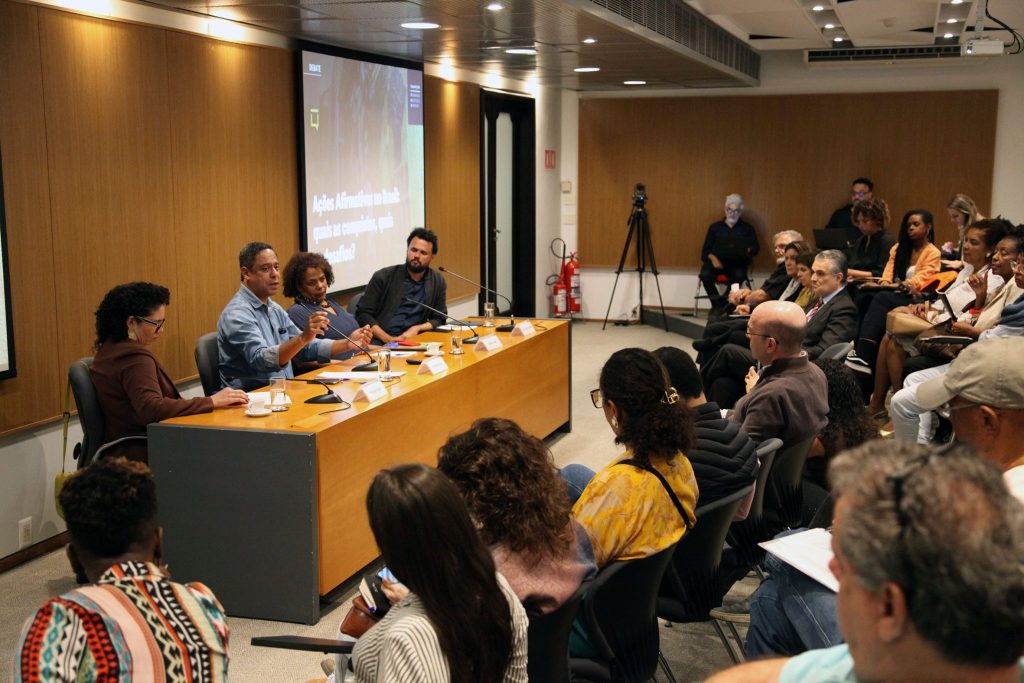
In summary, this was what the participants said at the seminar “Affirmative action in Brazil: what are the achievements, what are the challenges?”, which brought together, in addition to the Mr. Silva, researchers from different educational and/or research institutions, the executive director of the Movement for Racial Equality (MOVER) and Hélio Santos, a historic leader of the black movement.
“Affirmative action in higher education has worked. In 2019, the Black population became the majority in public universities, with 50.3% of students being Black or brown. But the challenge remains. According to a survey by CEDRA (Center for Studies and Data on Racial Inequalities), between 2012 and 2023 there was a 1.2 percentage point drop in the income gap between whites and blacks. But the average income of black workers still corresponds to 59% of the average income of white workers. If the gap falls by 1.2 percentage points every 11 years, it will take 376 years to equalize the income of black and white people. We have been dreaming too small in Brazil; we need to recalibrate our dreams,” said Mr. Santos, retired professor at FEA-USP and president of the Boards of Oxfam Brazil and CEDRA.
“Quotas have had an important effect on improving educational opportunities for the black population, but it is essential that quota graduates can compete on equal or less unequal terms in the labor market. We still have little information about the effects of racial quotas on the job market,” warned Luiz Augusto Campos, professor of sociology and political science at IESP-UERJ and former coordinator of the Affirmative Action Monitoring Consortium, which brings together about 40 researchers from across the country.
“How can the private sector contribute to scaling up affirmative action policies so that black workers not only have better incomes but also increasingly occupy leadership positions? We conducted a survey that shows that 67% of Brazilians are in favor of companies having diversity, equity, and inclusion programs. It is essential to invest in structured affirmative action in the private sector as well,” said Natália Paiva, executive director of MOVER (Movement for Racial Equity), a coalition of 60 large Brazilian companies that aims to promote and accelerate racial equity.
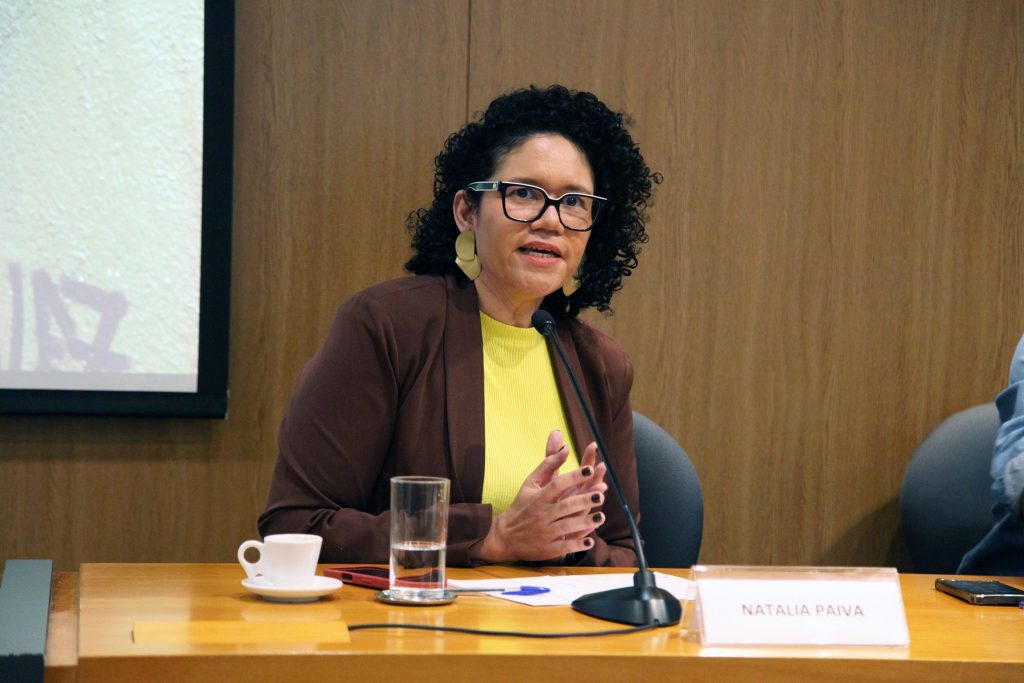
Photo: Vinicius Doti
“Affirmative action is not limited to quotas for Black people in universities or the civil service. It is essential to restore the memory of the Black population in Brazilian history, as occurred with the listing of Serra da Barriga and the creation of the Fundação Zumbi dos Palmares (both under the Sarney administration) and the titling of quilombola territories (a process initiated under the Collor administration). Much has been done since redemocratization, but the construction of a system to promote racial equality is still a project under dispute. There is no guarantee that there will be no setbacks,” warned Andrea Lopes, professor at the School of Political Science and the Graduate Program in Social Memory at Unirio.
“The future of affirmative action policies requires monitoring, management, coordination, and budgeting,” said Márcia Lima, professor in the Department of Sociology at FFLCH-USP and former National Secretary of Affirmative Action and Anti-Racism Policies at the Ministry of Racial Equality.
Brazil has social and racial quotas. For admission to public federal universities, the racial quota represents a fraction of the quota reserved for low-income individuals from public schools. The Quota Law of 2012, amended in 2023, reserves 50% of places for those who have completed all of their secondary education in public schools. Half of these reserved places are allocated to students from families with a gross per capita income equal to or less than 1 minimum wage. The quota of places reserved for black people, indigenous people, and people with disabilities varies according to the composition of the population in each state, according to data from the Brazilian Institute of Geography and Statistics (IBGE).
Affirmative action at the end of the 20th century is a counterpoint to the policy for immigrants at the beginning of the Republic
Hélio Santos, a long-time activist in the anti-racist struggle, opened the first panel, dedicated to taking stock of the past and present of affirmative action policies. He highlighted two decrees published in the early years after the Proclamation of the Republic (1889): Decree No. 528, signed by President Deodoro da Fonseca in 1890, and Decree No. 9081, from 1911, which was much more extensive and detailed. Both were intended to encourage and support the arrival of immigrants to the country, especially Europeans, to meet the demands of the labor market after the Abolition of Slavery, and included the distribution of land and financial assistance to settlers.
“The immigration of foreigners to Brazil in the late 19th and 20th centuries was very important for the country’s development. Brazil did well to attract them. But I draw attention to the fact that the first republican governments offered benefits to immigrants from Europe and other parts of the world, while Brazilians of African descent and indigenous peoples were abandoned by the state. The affirmative action policies put in place since the end of the 20th century are, therefore, a counterpoint to the policies for immigrants over a century ago. It is sad to see that some of the grandchildren or great-grandchildren of those first immigrants have criticized affirmative action for the black, indigenous, and quilombola populations,” he said.
Santos also criticized the argument that social quotas, intended for students from public schools, regardless of the race of the beneficiary, would be sufficient to reduce social inequalities in the country. “There are those who argue that social quotas would be sufficient, but we do not accept this argument. A true social policy that included the black and indigenous populations, as well as poor immigrants arriving in the country, would have been welcome at the turn of the 19th to the 20th century. But after almost a hundred years of total abandonment, now we must have specific policies for Afro-Brazilians as compensation for a historical gap, as well as for indigenous peoples,” said Santos.
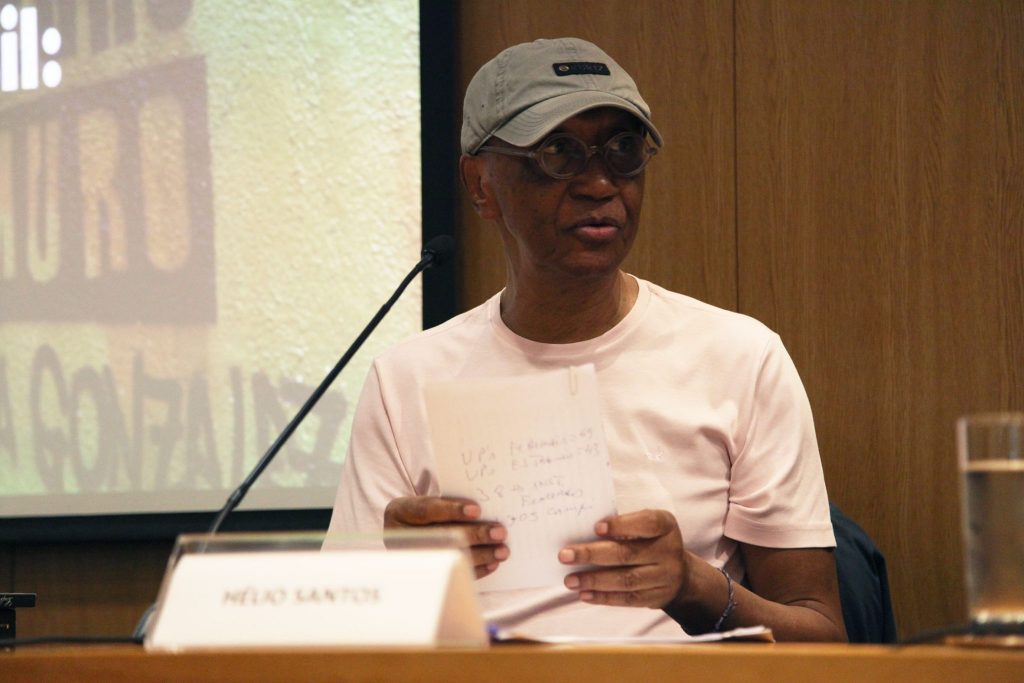
Photo: Vinicius Doti
Hélio Santos chaired the country’s first Black Community Development and Participation Council, created in 1984 in São Paulo by then-Governor André Franco Montoro: “We were still in the midst of a military dictatorship when Governor Montoro created this council, which was Brazil’s first affirmative action policy after 96 years of silence. In the São Paulo council, we did pioneering work and encouraged the creation of four other councils in other states.”
Also appointed by Montoro, Santos participated in the Afonso Arinos National Commission, formed in 1985 to discuss the draft of the future 1988 Constitution. “Formed by notable jurists and intellectuals, there was no black representative. Montoro pressed for it, and I was appointed. In that draft of a new Constitution, we proposed the criminalization of racism, a reparations fund for the black population, the reservation of places for blacks in education, and even the demilitarization of the military police. In some things we made progress, in others we did not,” he recalled.
On November 20, 1995—300 years after the death of Zumbi dos Palmares—thousands of people participated in the Zumbi dos Palmares March Against Racism, for Citizenship and Life in Brasília. On the same date, then-President FHC, who was completing his first year in office, created the Interministerial Working Group for the Valorization of the Black Population (known as GTI), formed by eight civil society leaders and representatives from various ministries and federal government agencies.
“Once again, I was honored to be appointed by President Fernando Henrique to coordinate this group. I tell the younger generations that it was a difficult struggle. A war was waged from north to south against the GTI’s proposals. One hundred and fourteen intellectuals delivered a petition to the National Congress saying that we intended to create a division in Brazilian society. The DEM (a party that was part of the government coalition) filed a lawsuit with the Supreme Court claiming that the proposal was unconstitutional,” said Santos.
In 1996, FHC signed a law that inscribed the name of Zumbi dos Palmares in the “Book of Heroes and Heroines of the Fatherland.” “Fernando Henrique was the first president of the Republic to publicly acknowledge that there was prejudice and racism in Brazil, and by responding to a long-standing demand from the Unified Black Movement (MNU, created in 1978) and inscribing Zumbi in the pantheon of Brazilian heroes, he aroused resentment from sectors of the Armed Forces. He told me this confidentially at the time. Today we can talk about it openly,” he said.
Pressure from the Black Movement in the 1970s and 80s led to affirmative action policies
Also in 1996, the FHC administration launched the first National Human Rights Program, which, according to Andrea Lopes (Unirio), was another important milestone in the anti-racist struggle. “The PNDH was a response to the Carandiru Massacre (1992), the Candelária and Vigário Geral massacres (1993), and the Eldorado do Carajás Massacre (1996). The debate on human rights gained momentum in the country and resulted in the launch of the first PNDH. It was the first official document to include the concept of affirmative action in its text,” said the researcher, author of a thesis on PNDH-1. The PNDH-2 was launched in 2002 and the PNDH-3 in 2009, both during the Lula administration. The latest version, which replaces the previous ones, is structured around six guiding principles, which include democratic interaction, development, universalization of rights, public safety, education and culture in human rights, and the right to memory and truth.
“Both the GTI and the PNDH, as well as the Working Group for the Elimination of Discrimination in Employment and Occupation (GTEDEO, 1996), were responses to pressure from the MNU, which denounced Brazil to the International Labor Organization. An ILO commission came to Brazil, confirmed the accusations, and demanded action from the Brazilian government,” reported Lopes. “Since 1974, when I began my activism, I am not aware of any initiative to reduce racial inequality that did not originate in the Black Movement. Everything we have achieved in recent decades has come from the pressure of black activism,” agreed Santos.
He recalled Brazil’s participation in the Durban Conference against Racism, held in South Africa in 2001: “In Durban, the Brazilian Foreign Ministry team put on a show, leading the discussions on affirmative action. From that year on, Brazil became one of the world’s leading players in the field of racial equality policies.”
Also in 2001, the Rio de Janeiro Legislative Assembly passed a state law, proposed by Governor Anthony Garotinho, that reserved quotas for Black and brown people in Rio de Janeiro’s public universities, and the following year, the State University of Rio de Janeiro (UERJ) pioneered the adoption of the quota system, with 40% of places reserved for Black candidates.
During the Lula administration, there were further advances, such as the first affirmative action measures in the federal civil service, the inclusion of Afro-Brazilian history and culture in the school curriculum, and the creation of the Racial Equality Statute. In 2012, the eleven ministers of the Federal Supreme Court unanimously validated the constitutionality of the racial quota system, and President Dilma Rousseff signed the Racial Quota Law into law. “Today, the country has 69 federal universities, 43 state public universities, and 38 federal institutes with affirmative action programs, in addition to quota programs in the civil service,” Santos pointed out.
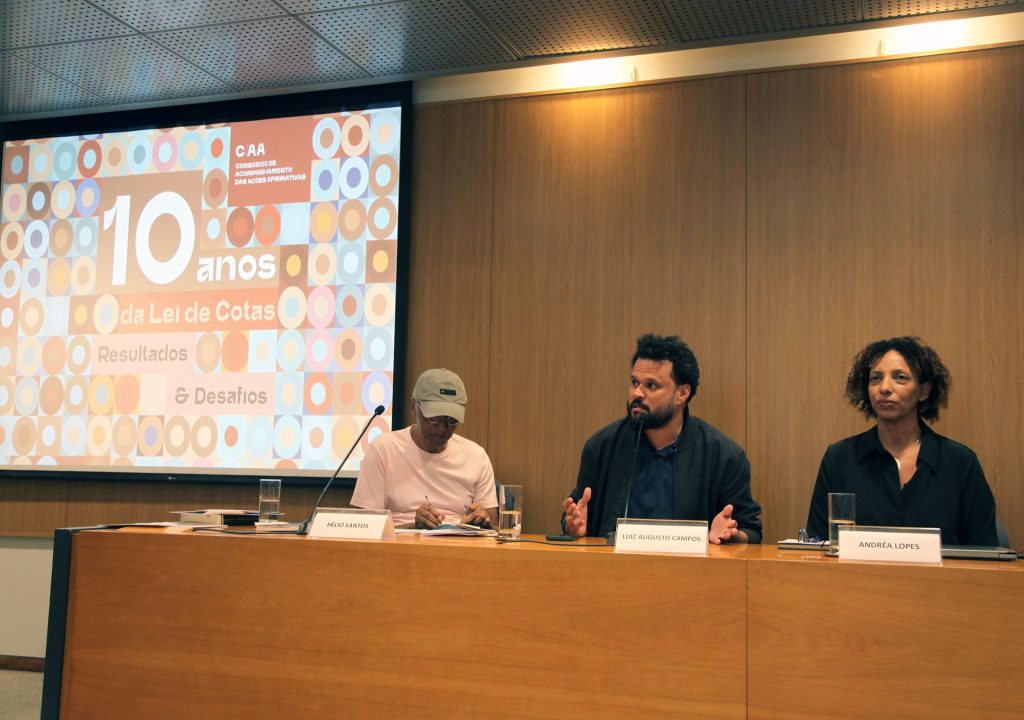
“Brazil currently has the largest racial quota system in the world, but racial inequality in the country is so abysmal that it will take a long time, if ever, to have an impact on the Gini Index of the black population. Racial inequality emerges in many stages of black people’s lives, and we need to think about a system that acts at all stages,” said Luiz Augusto Campos (IESP-UERJ).
Ministry of Racial Equality is symbolic, but lacks coordination in the federal government
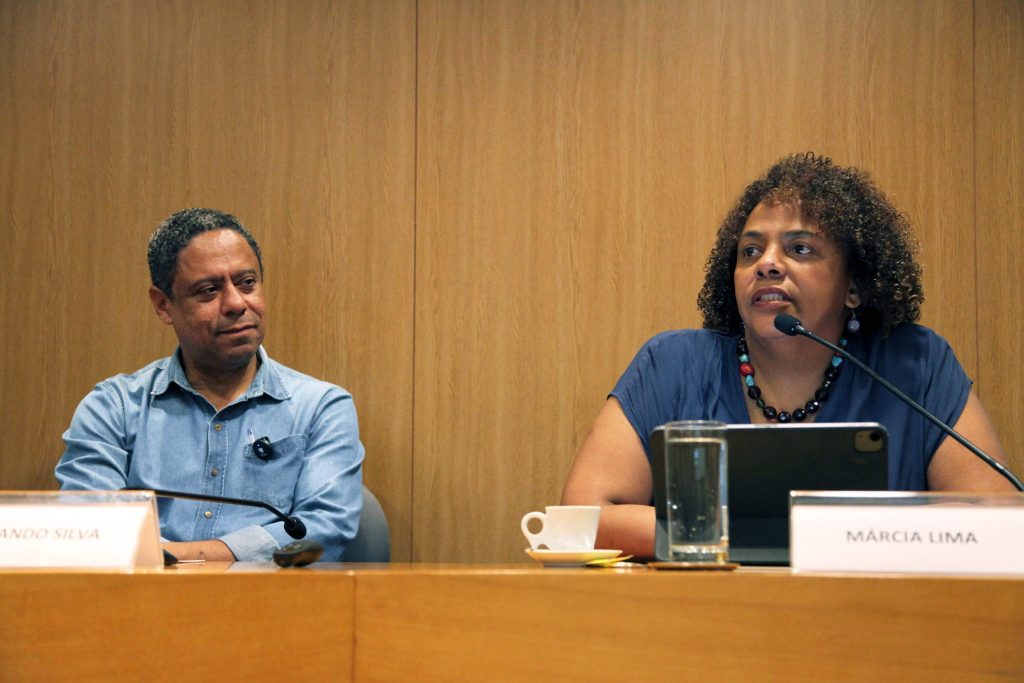
At the start of his third term in January 2023, President Lula created three ministries: Women, Indigenous Peoples, and Racial Equality. “These are symbolic portfolios, but the inter-ministerial design of these ministries does not facilitate the development of intersectoral policies. The only way to successfully implement policies for racial equality, women, and indigenous peoples is to not view these ministries as finalistic. They are not. A ministry with a budget of only R$ 300 million or R$ 400 million cannot be finalistic,” said Marcia Lima, former National Secretary for Affirmative Action and Combating Racism at the Ministry of Racial Equality.
The first to speak on the panel about the future of affirmative action, Lima defended the need for more coordination: “The great challenge for the Ministry of Racial Equality is to build a policy that engages with other ministries and public agencies, as well as with universities, which have autonomy, with states and municipalities, the private sector, and the third sector. The person at the head of the ministry has an institutional leadership role and must be, above all, a coordinator.” The current Minister of Racial Equality is Anielle Franco, sister of Rio de Janeiro city councilor Marielle Franco, who was shot and killed in Rio de Janeiro in 2018.
Lima also criticized the fact that there is still no national registry of quota students, which would allow for monitoring their progress as university students and later in the job market. “Each university records and monitors in its own way. The solution would be simple: at the beginning of each year, every quota student should fill out a form with basic information, and INEP could centralize this data. We are often asked, ‘How many more years do we need to have quotas?’. Without consolidated and updated information, it is not possible to answer,” she said.
Affirmative action policies are the basis for the private sector to do its part
Created in 2021 by a group of large Brazilian companies with the aim of working together on the racial equity agenda, MOVER (Movement for Racial Equity) already counts 4,500 Black people who have taken on leadership positions in the approximately 60 companies that make up the coalition.
“Our job is to review company policies, processes, and culture to overcome the underrepresentation of Black people in leadership positions. Over the past four years, companies that are part of MOVER have invested R$ 80 million in structuring affirmative action,” said Natália Paiva, executive director of MOVER (Movement for Racial Equality). Training is another essential factor in accelerating the advancement of Black professionals in the corporate world, through language, specialization, MBAs, and postgraduate studies. Around 120,000 scholarships have been awarded by MOVER for this purpose.
“We are working to do our part, but it is important to emphasize that public policies are the basis of everything. Without quotas for black people in higher education, there would be no MOVER. Without ProUni, there would be no MOVER,” said Natália Paiva, executive director of MOVER (Movement for Racial Equality).
Paiva pointed out that small and medium-sized companies are the largest employers in the country and should also participate in the effort for greater racial equity. “We have a program to integrate companies formed by black people into the production chains of MOVER companies,” she reported.
“The federal government can create incentives and mechanisms to encourage the private sector to adhere to affirmative action policies,” argued Marcia Lima.
Congressman Orlando Silva proposes dialogue with the center-right to consolidate programs
“Over the past 15 years, we have consolidated legislation that established affirmative action policies in the country. There was intense debate about the constitutionality of this matter, and we were victorious. Now we are working on a Proposed Constitutional Amendment (PEC) that aims to create the National Fund for Economic Reparation and Promotion of Racial Equality and a National System for the Promotion of Racial Equality, inspired by the SUS,” said Congressman Orlando Silva, rapporteur for Proposed Constitutional Amendment 27/2024.
Silva highlighted the fact that the PEC da Reparação (Reparation PEC), as it is known, was presented by federal deputy Damião Feliciano, from Paraíba, affiliated with the União Brasil party. “It is good news that a representative of a center-right party is leading the proposal to create a National Fund for Economic Reparation and Promotion of Racial Equality,” said the former Minister of Sports.
In addition to Orlando, the special commission analyzing the PEC includes Representatives Benedita da Silva (PT-RJ) and Dandara Tonantzin (PT-MG) and Representatives Josivaldo JP (PSD-MA) and Márcio Marinho (Republicanos-BA). “We have parliamentarians from both the left and the right on the board, and this is important because, in order to amend the Constitution and enable the creation of the Fund, we will also need the support of the more conservative camp in both the Chamber of Deputies and the Senate,” he said.
According to Silva, the proposal is for the Fund to have a budget of R$ 1 billion per year for a period of 20 years. The resources would come from international and national donations, compensation payments for crimes of racism determined by the courts, and public contributions. Management would be carried out by a joint state-civil society council.
As rapporteur, the congressman defended the need to constitutionalize the National System for the Promotion of Racial Equality: “Just as we have the SUS and the SOAS, this would be a protective measure that would shield racial equity policies from future political changes, transforming them into state policies.”
Orlando Silva also spoke about the importance of overcoming the political underrepresentation of Black people in Brazil. “When we look at those registered to run for election to the Chamber of Deputies, the percentage of Black and brown candidates is proportional to the participation of Black people in society. But, with the votes counted, the disproportion is great. This is because black candidates are not financed as they should be by party leaders. To overcome this obstacle, Brazilian parties need to include more black people in their decision-making bodies,” he concluded.
Pé de Meia is the main program for basic education, but it needs to gain reach
“We talk a lot about higher education, but I feel there is a lack of a more structured policy to combat racism and promote racial equality in basic education, both in elementary and high school. Are there any relevant initiatives in this regard?” asked political scientist Sergio Fausto, general director of the Fundação FHC.
“In Brazil, we don’t have a problem with black children’s access to public schools, but if you ask a black person what their first racist experience was, the answer will be that it was at school. Alongside violence, racism is one of the main reasons for school dropouts. Anti-racist education is a well-established agenda, but one that continues to challenge us to this day,” replied Marcia Lima.
“For me, the Pé de Meia Program is currently the most important program for black children and adolescents. It is no wonder that it has been so fiercely opposed. Pé de Meia needs to be expanded and refined,” said Hélio Santos.
“When I was in the federal government, I proposed that Pé de Meia should be part of the set of affirmative action policies, although it does not have this specific focus. I suggested the creation of a seal, ‘Aqui tem Juventude Negra Viva’ (Here there is Black Youth Alive), to be stamped on programs that benefit Afro-Brazilian youth, developed not only by the federal government, but by governments across the country, including Pé de Meia. It would be a way to integrate different initiatives and better communicate everything that has been done. Unfortunately, the idea did not go forward,” concluded Lima.
Otávio Dias is content editor at the Fundação FHC. A journalist specializing in politics and international affairs, he was a correspondent for Folha in London and editor of the estadao.com.br website.